
Article at a Glance
How many people in Arkansas are living in poverty right now?
As of 2024, 466,459 people in Arkansas, about 15.5% of the state’s population, are living below the poverty line. That’s the lowest rate Arkansas has seen in over a decade, which reflects progress. However, nearly half a million people still isn’t small, and behind every percentage point are families navigating something most people never have to think about.
How does hunger specifically impact Arkansas families and kids?
Hunger and poverty overlap but aren’t the same thing. People can be food insecure without technically living below the poverty line. Arkansans facing hunger are estimated to need $402 million more per year just to meet their basic food needs. Plus, nearly half of all Arkansas households receiving SNAP benefits have children.
Are things getting better or worse in Arkansas?
Better. Arkansas’s poverty rate peaked at 19.8% in 2012 and has steadily declined since. The child poverty rate dropped from 26.4% in 2014 to 20% in 2024. Progress is real. The need, though, is still significant, and the families still in poverty aren’t experiencing the improvement as a statistic. They’re experiencing it as daily life.
What do these numbers mean for families?
They mean parents making impossible tradeoffs, kids going to school hungry, and families navigating systems that weren’t designed with them in mind. The numbers show the scale of the need, but the stories behind them show what it’s like to live inside it. That’s the part this article is here to help you understand.
Statistics have a way of sliding past us.
We read them, register them briefly, and then move on. Because a number, no matter how significant, doesn’t have a face. It doesn’t have kids to get to school, bills to figure out, or a refrigerator running low three days before payday. It sits there on the page, waiting for context that most people never stop to give it.
This article is that context.
The numbers we’re going to walk through are sourced and worth knowing, since understanding the scale of need in Arkansas is the first step toward doing something about it. But we’re not sharing them to overwhelm or guilt. We’re sharing them because the people behind them deserve to be seen, and because you can’t care about something you don’t fully understand.
Every percentage point in this piece represents thousands of families. Every statistic points to a child, parent, or neighbor. Someone navigating a reality that most people pass by without realizing it’s there.
By the end of this, we hope the numbers feel less like data and more like people. Because that’s exactly what they are.
The Poverty Picture in Arkansas
As of 2024, 15.5% of Arkansas’s population is living below the poverty line. That’s nearly half a million Arkansans whose household income doesn’t cover what most of us consider basic needs: food, housing, healthcare.
The encouraging part is that this is the lowest poverty rate Arkansas has recorded in over a decade. At its peak in 2012, the state’s poverty rate hit 19.8%. The downward trend since then reflects some great progress.
Unfortunately, progress and solved aren’t the same thing.
466,459 people is still an enormous number. And the geography matters too. Rural Arkansas communities tend to carry the heaviest burden, with limited access to jobs, transportation, and services that could help families move forward. Poverty also shows up in suburban neighborhoods and apartment complexes in ways that are easy to miss if you’re not looking for it.
The Hunger Picture in Arkansas
Poverty and hunger are related, but they’re not the same thing, and that distinction matters.
A family can be food insecure without technically falling below the federal poverty line. They might be earning just enough to disqualify them from certain assistance programs while still not earning enough to consistently put food on the table. The gap between those two realities is wider than most people realize, and in Arkansas, many families live inside it.
According to Feeding America, Arkansans facing hunger are estimated to need $402 million more per year to meet their basic food needs. That number is almost too big to process, but it points to something important: the gap between what hungry families have and what they need is vast.
SNAP (the Supplemental Nutrition Assistance Program) helps bridge part of that gap for a lot of families. In Arkansas, 48.3% of households receiving SNAP benefits have children. Nearly half. That means for a significant portion of families relying on food assistance in this state, the stakes are generational. Kids who grow up food insecure carry that experience with them in ways that impact their development, education, and future.
Food assistance programs are critical, but they can’t carry the weight alone. The $402 million gap makes that clear. Charitable organizations, community partnerships, and people who choose to show up help bridge the rest, and the need is as concrete as the number itself.
Seeing the People Behind the Data
“The poverty rate going down is good news, and we celebrate that. But for the families still inside those numbers, the trend line doesn’t change what their week looks like. That’s why we keep showing up. Because progress at the state level only becomes real when it reaches the people who need it most.”
— Drew Davis
Kids Are Carrying the Most
If there’s one part of Arkansas’s poverty picture that demands the most attention, it’s this: the people bearing the heaviest weight are the ones who had no say in the circumstances they were born into.
As of 2024, 25% of Arkansas children, 1 in 4, face hunger. Children in classrooms, apartment complexes, and neighborhoods right now are navigating something no child should have to navigate, often without anyone around them knowing the full weight of what they’re carrying.
What makes childhood poverty so significant beyond the immediate hardship is what it does over time. Growing up food insecure affects how kids learn, feel, grow, and ultimately what their future looks like. The effects follow kids into adulthood and into the next generation, unless something interrupts the pattern. That interruption is possible, but it requires people who care enough to show up consistently for the kids who need it most.
Progress Is Real and So Is the Gap
It would be easy to read these numbers and feel hopeless or dismissive, either overwhelmed by how much need remains or reassured by the progress and ready to move on. Neither response serves the families inside these statistics.
The honest picture is both things at once.
Arkansas’s poverty rate is the lowest it’s been in over a decade. The child poverty rate has dropped six percentage points in ten years. SNAP and other assistance programs are reaching families who need them. That’s all huge.
Yet nearly half a million Arkansans are still in poverty. Kids are still going to school hungry, still falling behind, and carrying weight that shapes their futures in ways that extend far beyond childhood.
Families still in the gap don’t need us to choose between celebrating improvement and acknowledging what remains. They need us to do both, and then keep showing up anyway.
Arkansas Needs People Like You
The numbers in this blog aren’t meant to leave you feeling stuck but informed (and hopefully, motivated!).
Every Arkansan exists because the numbers demanded a response and because a community decided to give one. Here’s how you can be part of it:
Give. Your support funds the meals, programs, and relationships that address poverty and hunger directly. Consistent monthly giving creates the kind of stability for our programs that we’re trying to create for the families we serve.
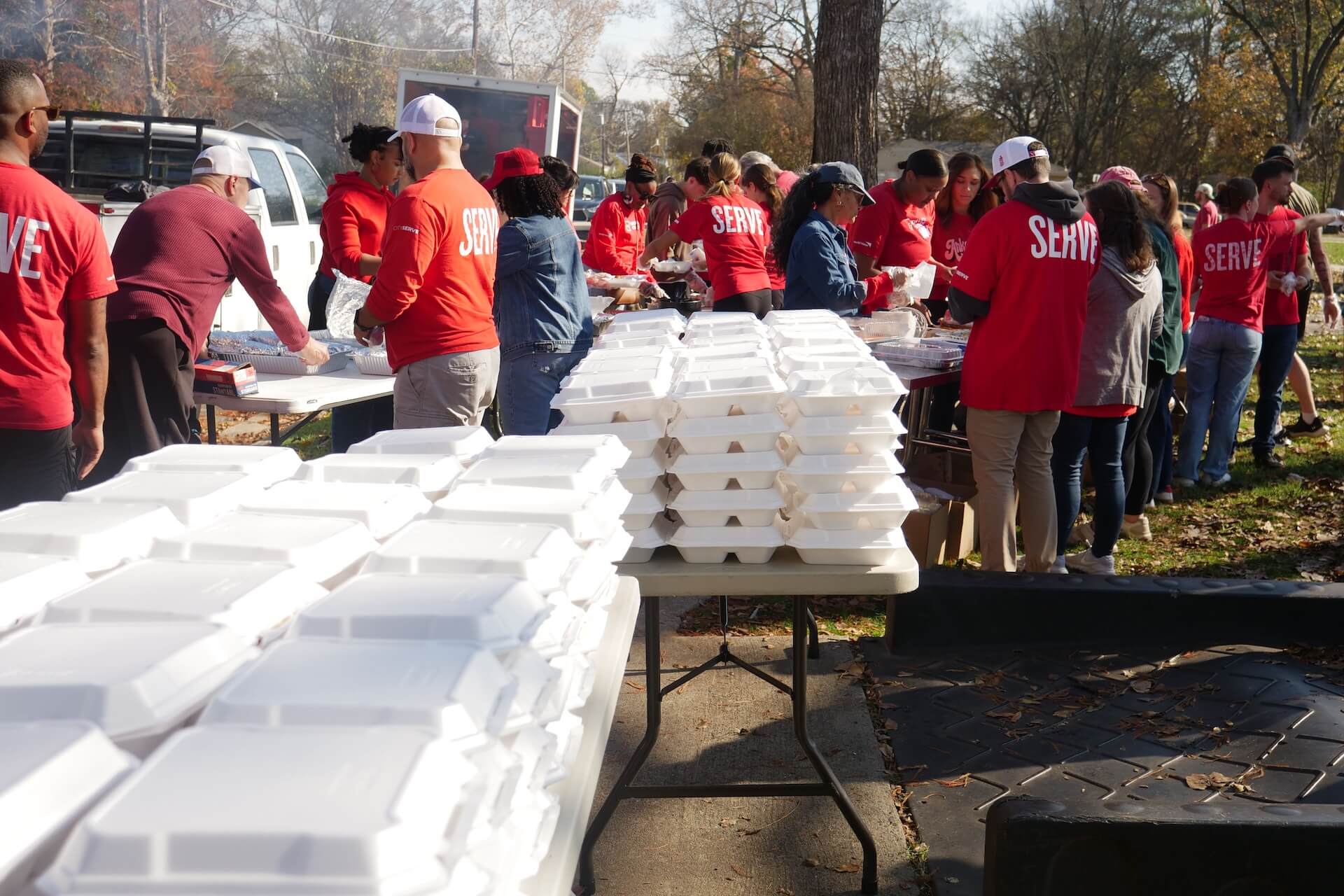
Volunteer. Show up in person and join the hands-on work that makes a huge difference. Serve Saturday is the easiest place to start, and one of the most meaningful ways to spend a morning.
Share this. Most people in Arkansas don’t know these numbers. Changing that starts with passing this along, as awareness is what moves people from knowing to doing.
Nearly half a million Arkansans are living in poverty, but behind every one of them is a story worth showing up for!

Free Family Devotional: Empower Kids to Love Your Neighbor
Raising kids who care starts with showing them what caring looks like. This free family devotional gives you simple, practical ways to bring your family together around something that really matters — loving the people right around you.