
Article at a Glance
Why does it matter how we think about poverty?
Because the way we see people shapes how we respond to them. When assumptions get in the way, real families in need can go unseen and unsupported. Getting this right changes what’s possible for those around us.
Who’s experiencing poverty in Arkansas?
Probably not who you’d picture. Poverty in Arkansas crosses every background, zip code, and walk of life. It includes people who are employed, educated, and doing everything they were told would keep them stable. It’s closer to home than most people realize.
Can someone work full-time and still struggle?
Absolutely, and it happens often. When the cost of living outpaces what a paycheck covers, working hard isn’t always enough. A lot of families in Arkansas are doing everything they can and still coming up short at the end of the month.
Is poverty a personal failure or something more complicated?
A lot more complicated. One unexpected setback, like a medical bill, car repair, or lost shift, can unravel stability that took years to build. Without a safety net, even careful, hardworking people can find themselves in a situation they never saw coming.
What difference does it make to understand the big picture?
Everything. When we let go of assumptions and see people for who they are—parents trying their best, families doing everything they can—it opens the door to responding with more generosity and compassion.
We all carry a picture in our minds of what poverty looks like.
It’s shaped by things we’ve heard, stories we’ve seen, and assumptions picked up without noticing. For a lot of people, that picture seems accurate enough that it never gets questioned.
However, when the picture is wrong, we respond to the wrong thing. We look for poverty where we expect to find it and miss it everywhere else, and real families doing their best to stay afloat end up invisible because of it.
This isn’t about blame. Incomplete assumptions aren’t always mean-spirited, but they have consequences for people in our community.
So it’s worth taking a closer look at what poverty in Arkansas looks like, which we’re sharing more on below.
The Misconceptions
A lot of what people believe about poverty is incomplete. Unfortunately, incomplete pictures have a way of keeping us from seeing what’s right in front of us. Here are some of the most common ones worth rethinking.
“People in poverty aren’t working hard enough.”
This one is probably the most common and the most misleading.
Across Arkansas, there are parents leaving for work before their kids wake up, picking up extra shifts, and still coming home to a pantry that doesn’t have enough in it. The math doesn’t add up for a lot of families.
When the cost of housing, groceries, childcare, and transportation outpaces what a paycheck covers, working hard isn’t enough. Effort and outcome aren’t always connected the way we assume they are.
“It’s obvious who’s struggling.”
It isn’t. Not even close.
Poverty can look like a completely normal life from the outside. It’s the parent in the grocery store putting items back that didn’t make the budget this week. It’s the family that shows up to every school event and practice, while carrying a weight nobody around them can see. The people who need help the most can be the ones working hardest to make sure nobody notices.
“If they just made better decisions, they’d be fine.”
This one assumes everyone is making decisions from the same starting point, and they’re not.
When you’re managing constant financial stress, every decision carries more weight and less margin for error. One unexpected setback can unravel stability that took years to build. Without a safety net, even the most careful planning can fall apart fast. It’s not about bad choices but what happens when there’s no room for anything to go wrong.
“Poverty only affects certain kinds of people.”
The reality is wider than the stereotype.
Poverty in Arkansas crosses race, geography, education, and background. It shows up in rural communities and suburban neighborhoods. It impacts people who never imagined they’d need help and who wouldn’t fit anyone’s mental image of what struggling looks like. Letting go of that narrow picture is one of the most important things we can do to see the need around us.
“Once you’re out, you’re out.”
Stability is real, but it’s also fragile, especially early on.
One good month doesn’t erase years of financial stress or rebuild what was lost. For a lot of families, the risk of slipping back is as real as the progress they’ve made. Getting out of a hard season is one thing. Staying out requires consistency, support, and time. That’s why long-term care matters as much as immediate relief.
Seeing People for Who They Really Are
“When we let go of what we assume and look at who’s in front of us, everything changes. These are hardworking people doing their best in incredibly difficult circumstances. They don’t need our judgment. Instead, they need someone to show up.”
— Drew Davis
What’s True
The reality of poverty in Arkansas is less about character and more about circumstance.
The margin many families live within is incredibly thin, not because they haven’t tried hard enough, but because the gap between what they earn and what life costs leaves little room for anything to go wrong.
In Arkansas, over 592,000 people face food insecurity, and families are estimated to need $361 million more per year just to meet their basic food needs. Those numbers point to a need that’s deeper and closer to home than we might think.
The people behind those numbers are doing their best, and they deserve to be seen that way.
What Every Arkansan Believes
At Every Arkansan, we don’t lead with assumptions. We lead with people.
Every family that walks through our doors is met where they are, instead of where a stereotype puts them. Our team believes that dignity matters as much as the practical help, and that change happens when people are seen, not just served.
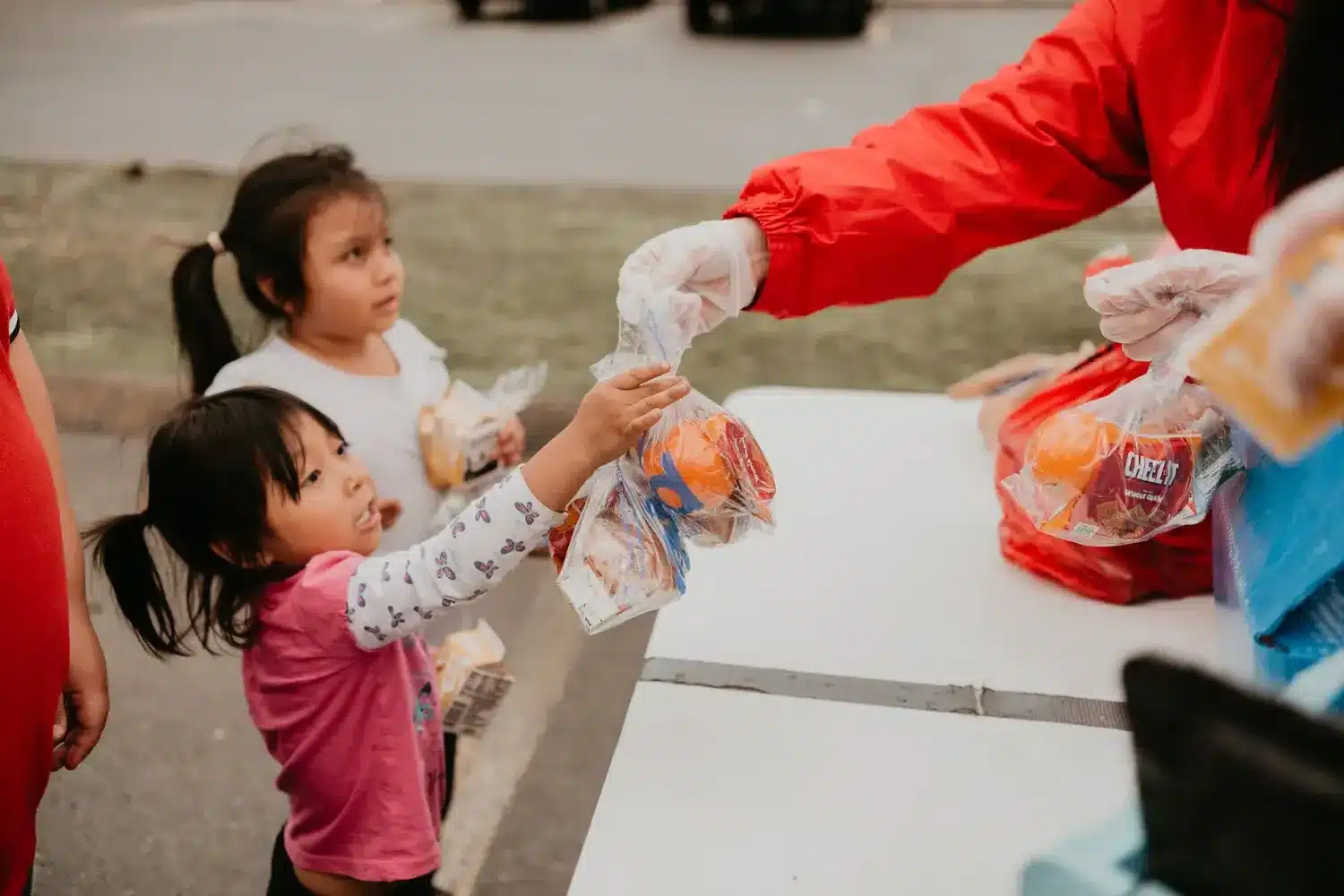
That looks like meals for families who need immediate relief. It looks like job support and recovery programs for people rebuilding from a hard season. It’s walking alongside someone long enough to see them find stable ground, and staying connected even after they do.
We know that the families who need help the most are sometimes the ones least likely to ask for it.
Changing that starts with changing how we see people. When we let go of incomplete pictures and look at who’s in front of us, it opens the door to something better.
Arkansas families deserve that. With your help, that’s what we can offer.
If you’ve read this far, you already care. The next step is simple: show up, give, and be part of what changes things for a family that’s closer than you think!

Free Family Devotional: Empower Kids to Love Your Neighbor
Raising kids who care starts with showing them what caring looks like. This free family devotional gives you simple, practical ways to bring your family together around something that really matters — loving the people right around you.